

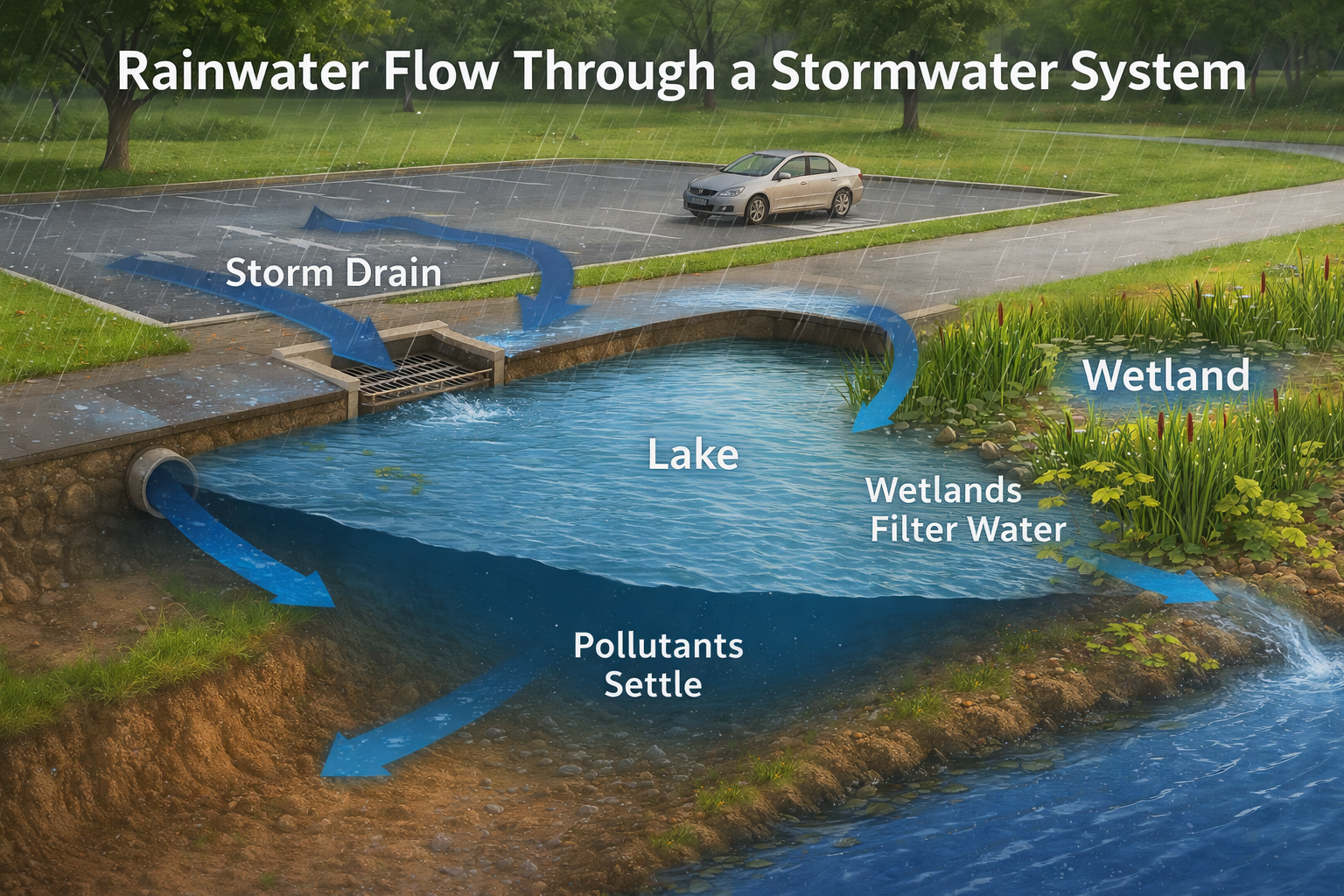
We’ve all felt that sudden chill of anxiety when stepping out of a car over a storm grate—the fear of dropping your keys or phone and watching them disappear into the abyss. But while that metal grate might seem like a hazard to your valuables, it serves a far more critical purpose: ensuring that massive amounts of rainfall drain to the correct location. Without them, much of our state would be virtually uninhabitable. When hurricanes do strike, they expose a major vulnerability for communities.
Communities face the growing threat that insurance companies might soon stop paying out on claims altogether if they cannot prove their storm drains were properly cleaned and maintained. In reality, that single grate is just the entryway into a much larger, engineered stormwater management system designed to protect your property. These interconnected networks of drains, pipes, swales, and community ponds are specifically constructed to collect, move, store, and treat water runoff from roads and parking lots before it can harm natural ecosystems. In Florida, the design, construction, and long-term operation of these facilities are typically governed by an Environmental Resource Permit (ERP). Because every single component affects the performance of the next, understanding how the system functions as a whole is essential for its preservation.
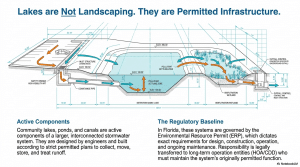
Once construction is completed by the site developer, the legal responsibility for the system’s operation and maintenance is usually transferred directly to a homeowners’, condominium, or property owners’ association. To effectively manage this transition and the ongoing obligations, it is highly recommended that communities designate one specific individual to oversee all maintenance activities, monitoring, and reporting. This allows the designated person to become intimately acquainted with the system, the permit requirements, and the construction drawings, ensuring the community stays compliant with water management district guidelines.
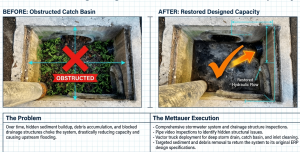
To prevent costly violations and ensure the system functions properly, routine inspections must become a cornerstone of your community’s maintenance plan. All stormwater pipes, inlets, catch basins, and discharge structures should be inspected on a monthly or quarterly basis, as well as immediately following any major rain events. During these inspections, debris and built-up vegetation must be removed, and deteriorating structures must be repaired. Ultimately, it is significantly more cost-effective to perform routine monitoring and maintenance than to allow the system to fail and face the exorbitant cost of reconstructing the entire network.
A crucial aspect of protecting your stormwater system is ensuring that harmful substances never enter the network. Residents must be aware that chemicals, oils, greases, and similar hazardous wastes should never be disposed of directly into storm sewers, as they can kill vital vegetation and wildlife. Furthermore, grass clippings and yard waste must never be dumped into the system. Decaying grass clippings not only smother desirable vegetation and clog outfall structures, but they also trigger unsightly algae blooms that deplete oxygen and can cause massive fish kills.